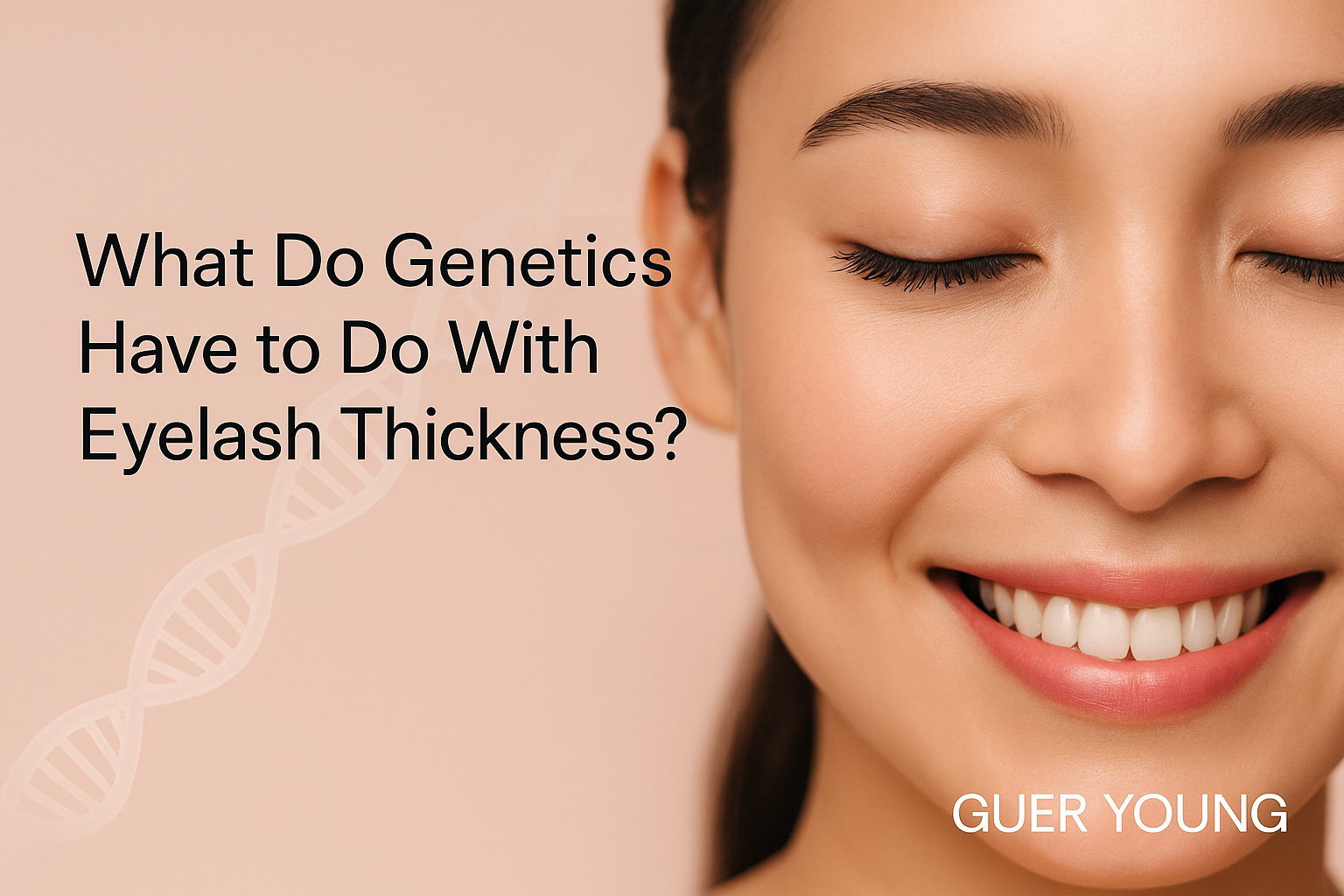
Why are some people born with thick, full lashes while others have to rely on layers of mascara or false lashes? The answer lies in a mix of biology and genetics. Eyelash density—the overall appearance of how full your lashes look—is determined by several factors: the number of hair follicles per square millimeter, the thickness of each lash strand, and the natural lash growth cycle. Among all these, genetic factors play one of the most crucial roles in determining your natural lash growth potential.
It Starts at Birth: Your Follicle Count is Inherited
Just like your hair texture and color, the number of eyelash follicles you’re born with is determined by your parents’ DNA. This number is set at birth and does not increase over time. If both your parents have naturally sparse lashes, chances are high that you may have inherited a lower lash follicle count as well. This is why some people can’t seem to grow dense lashes no matter how many products they try—genetics and eyelash density are deeply linked.
Thickness, Length, and Curl—All Written in Your Genes
Your lashes aren’t just about quantity. Genetics also influence the eyelash thickness, the length of each individual strand, and even the degree of natural curl. Some people may have plenty of lashes, but they are so fine, light in color, or soft in texture that they appear barely there. This explains the phenomenon of “lots of lashes, but not much volume”—a visual trick of nature shaped entirely by your unique genetic makeup.
The Lash Growth Cycle is Genetically Programmed
Another less visible factor is the lash growth cycle. This includes the anagen (growth), catagen (transition), and telogen (resting) phases. Some people naturally have a shorter growth phase, meaning their lashes never grow very long before falling out. Others may have a longer resting phase, making lashes appear thin or sparse. Your body’s genetic programming controls this cycle, which explains why slow lash growth is often hereditary.
Cultural and Ethnic Differences in Lash Genetics
People from different genetic backgrounds naturally have varying eyelash characteristics. For example, East Asian lashes may be straight and shorter, while Middle Eastern individuals often have thicker, darker, and more curled lashes. European genetics might result in lashes that are lighter in color, affecting how dense they appear. These differences are beautiful in their own ways and stem from centuries of evolutionary adaptation—not personal inadequacy.
You Can’t Change Your DNA—But You Can Support Your Lashes
While it’s true that you can’t rewrite your genetic code, what you can do is optimize the environment of your lashes. This includes nourishing the follicles, avoiding habits that cause breakage, and maintaining a healthy skincare routine. These actions can help you make the most of your natural lashes, even if genetics and eyelash density aren't on your side.
Internal and External Lash Support Methods
To support lash growth externally, consider using lash serums enriched with peptides, castor oil, or biocompatible vitamins. Internally, your body needs enough protein, iron, Biotin, and Vitamin E to fuel hair growth. Lifestyle matters too: restful sleep, gentle makeup removal, and avoiding aggressive lash treatments can prevent unnecessary fallout. The GUER YOUNG lash care line was developed to work with your body’s natural rhythm, supporting lashes from the inside out without disrupting their cycle.
Realistic Expectations: Genes Set the Limit, Care Maximizes It
Let’s be honest—no serum or supplement can override your DNA. Just like height, your lash potential has a ceiling. But with consistent care and the right products, you can come close to your genetic maximum. Think of it this way: you might not be able to grow new follicles, but you can strengthen what you already have, helping each lash reach its fullest potential.
Genetics Set the Baseline, But Care Shapes the Outcome
In the end, genetics and eyelash density define your starting point. But your routine, habits, and products influence how your lashes look day to day. If you're curious to explore which products may support your lash health, we invite you to check out our Eyelash Serum collection. Because every lash—just like every woman—deserves to feel empowered, nourished, and beautiful in its own way.
Want to support your natural lash growth? Discover GUER YOUNG’s clinically-inspired lash care solutions. Your lashes, only better.