
Why Does Your Brown Eyebrow Pencil Sample Look Too Red? A Shade Development Guide for Beauty Brands
Read in English | Lire en Français | Lesen auf Deutsch | Leer en Español
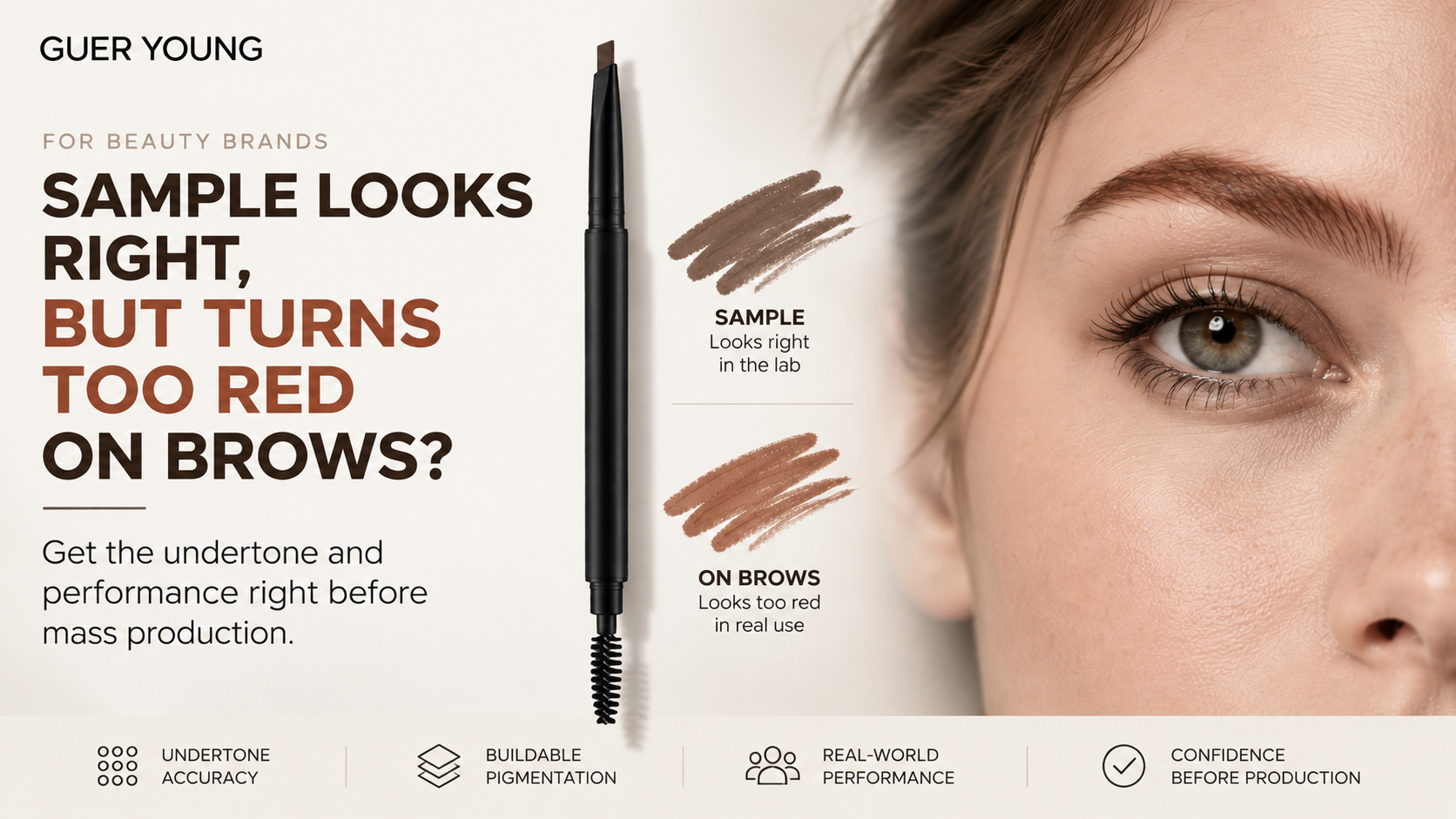
Your Medium Brown eyebrow pencil sample looks right in the lab—but once applied to the brows, it turns too red.
You ask for a cooler version.
The next sample comes back too gray.
Sound familiar?
This is a common challenge for beauty brands developing eyebrow pencil shades, especially when shade accuracy and undertone are important to their target market.
A color labeled “Brown” can look completely different once it is applied, layered, and combined with a consumer’s natural brow color, skin tone, and hair color. A shade that looks neutral in the pencil may become too warm on the brows. A correction intended to reduce redness may push the next sample too far toward ash or gray.
That is why eyebrow pencil undertone should be evaluated as part of the entire shade system—not as a color adjustment made in isolation.
For brands developing brow products, the real goal is not to create a brown that looks right in a sample.
It is to create a brown that still looks right when the customer wears it.
Why Can a Brown Eyebrow Pencil Sample Turn Red on the Brows?
Brown is not one simple color.
A brow pencil shade is created by balancing different pigments. Small changes in that balance can shift the final result toward red, yellow, gray, or other undertones.
This is why a Medium Brown sample can appear perfectly acceptable when you first receive it.
The pencil core looks brown.
The first swatch looks brown.
But after several strokes, the shade starts looking warmer.
Once it is applied over the natural brow hairs, the red undertone becomes even easier to notice.
This creates a common problem in eyebrow pencil color matching: the shade is being judged by how it looks in the pencil or in a single swatch rather than by how it performs during real application.
For a beauty brand, that difference matters.
Your customer does not buy a pencil core or a color card. She buys the final result she sees on her brows.
Why “Make It Cooler” Can Turn Your Brown Shade Too Gray
When a brand receives a sample that looks too red, the most natural feedback is:
“Can you make it cooler?”
The direction makes sense, but it may not be specific enough.
Reducing a warm or red undertone does not necessarily mean that the shade should become significantly cooler.
If the correction goes too far, a Medium Brown can quickly move from too warm to too gray.
The result may technically contain less red, but it still does not look natural.
This is one of the most important distinctions in eyebrow pencil undertone development:
Neutral is not the same as cool.
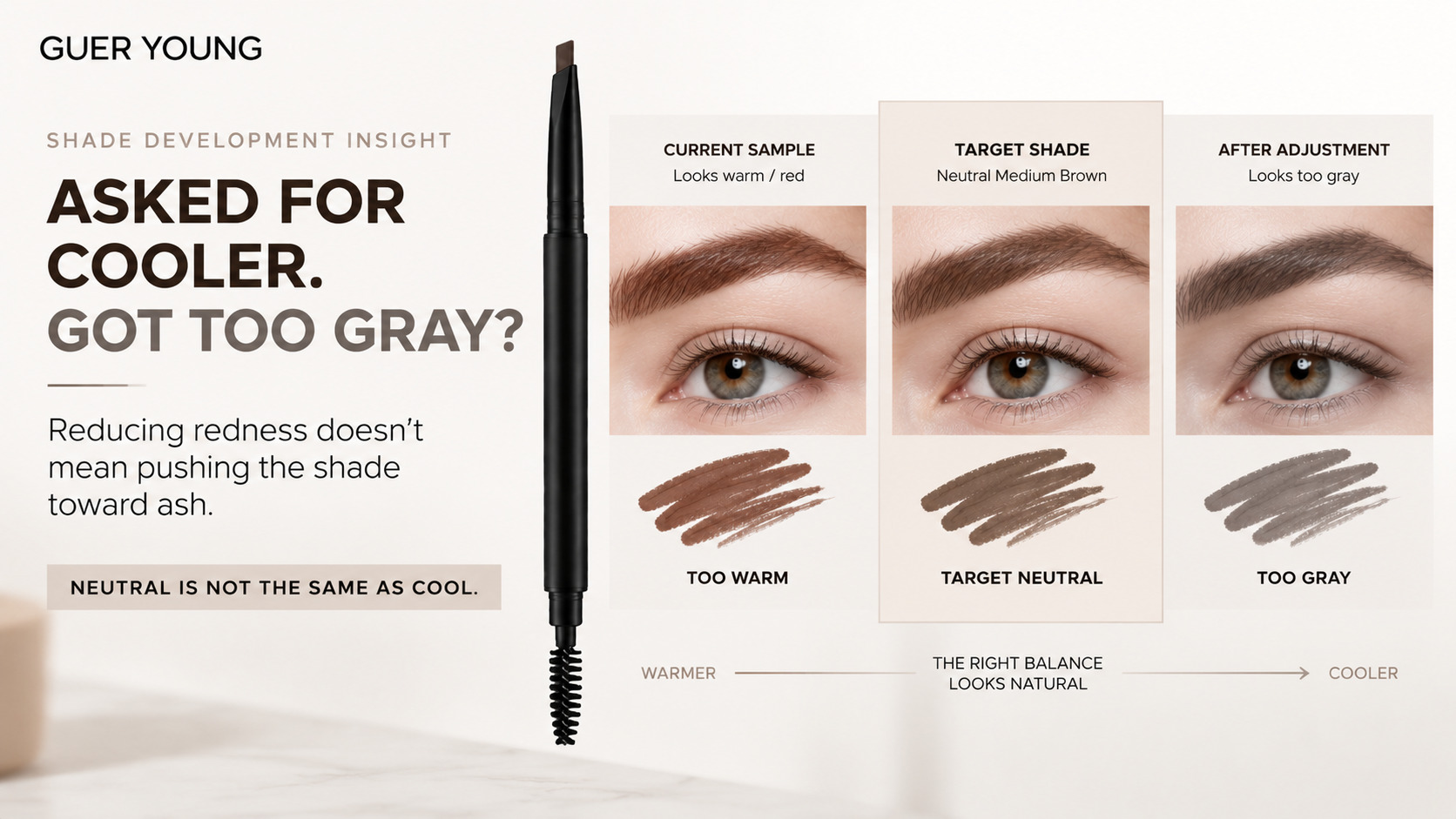
A Warm Brown may lean toward red, golden, or orange-brown tones.
A Cool Brown may lean toward ash or gray-brown.
A Neutral Brown needs a more controlled balance between the two. It should reduce obvious warmth without creating an overly ashy or dull appearance.
For brands trying to develop a versatile Neutral Medium Brown, finding that balance is often where multiple sample rounds begin.
Case Study: A Medium Brown Sample That Kept Looking Too Red
We encountered exactly this problem during an eyebrow pencil project for a beauty brand targeting European and North American consumers.
The client was developing a wearable range of eyebrow pencil shades, and Medium Brown was one of the most important colors in the collection.
The request sounded straightforward: a natural, everyday brown with a neutral undertone.
The first samples, however, were not quite right.
One version looked too warm.
Another looked acceptable in a light swatch but became noticeably redder when applied repeatedly.
After trying to reduce the warmth, the next direction risked becoming too gray.
The client did not want a Warm Brown.
But they did not want a strongly ashy brown either.
What they actually needed was a low-saturation Neutral Medium Brown that maintained its balance during real brow application.
At GUER YOUNG, we did not treat the feedback simply as a request to “add more cool tone.”
Instead, we went back to the way the shade behaved.
The Problem Was More Than Just the Color
We reviewed the pigment balance, eyebrow pencil pigmentation, pencil hardness, color payoff, and the way the shade developed after repeated strokes.
That revealed an important detail.
The first stroke was not the problem.
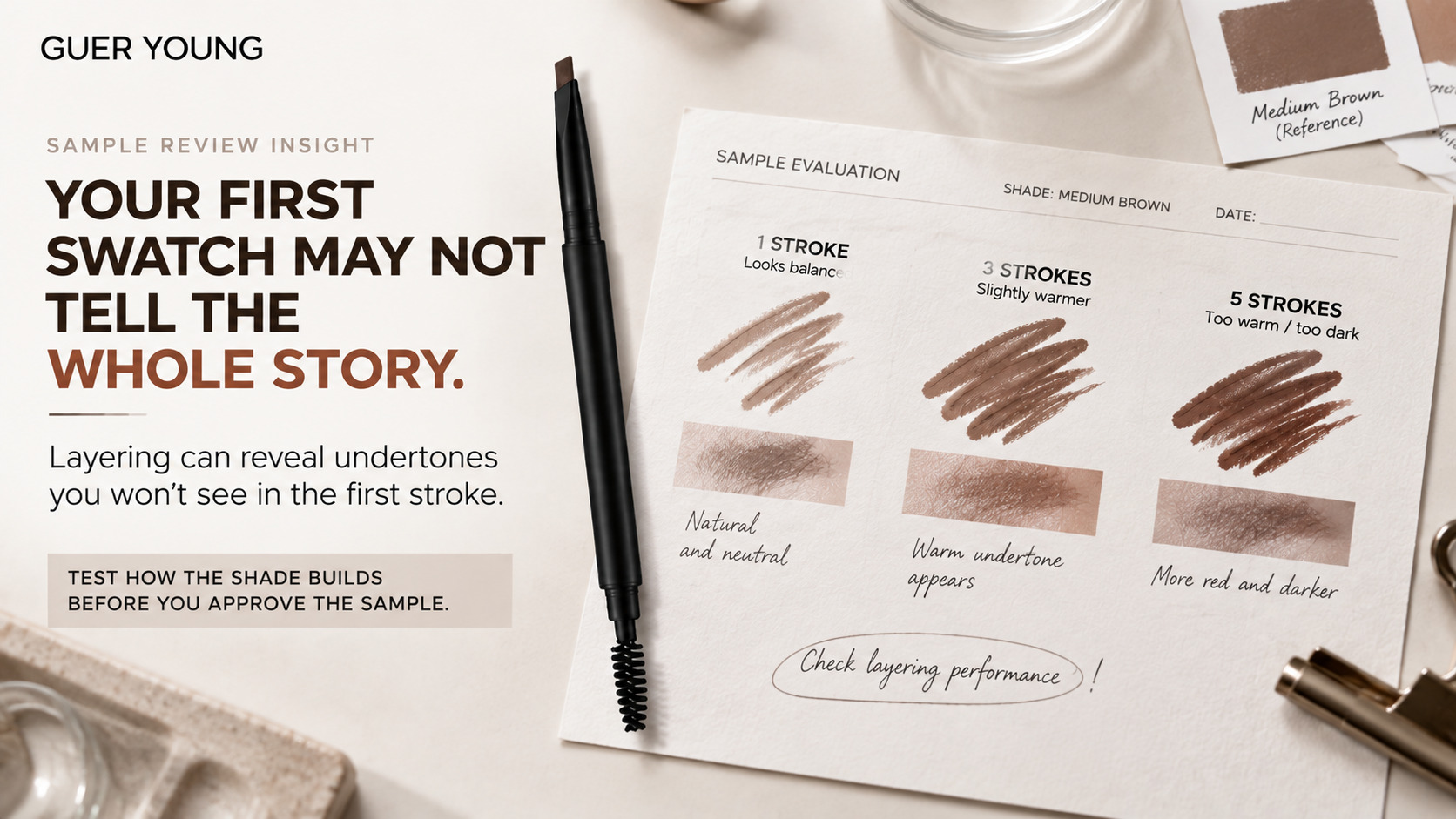
With a single light application, the original sample looked reasonably balanced. The unwanted red undertone became more visible as the product was layered.
This changed the development direction.
If we had focused only on making the original color cooler, we might have solved the red undertone while creating an overly gray result.
Instead, the goal became more specific:
Maintain the depth of Medium Brown, reduce the visible red undertone, keep the overall shade neutral rather than gray, and control how the color develops after multiple strokes.
This is an important part of professional eyebrow pencil shade development.
Sometimes the question is not simply, “Is this the correct color?”
The better question is:
“Does this color stay correct as the consumer actually uses it?”
Why Pigmentation Can Make the Right Shade Look Wrong
Undertone was only one part of the issue.
The next factor was eyebrow pencil pigmentation.
Imagine that the first stroke of a Medium Brown is exactly right. If every additional stroke deposits a large amount of pigment, the shade can quickly become deeper and heavier than intended.
The brand may then receive another type of feedback:
“Medium Brown is too dark.”
But the underlying issue may not be that the base shade itself is too dark.
It may be the way the formula releases color.
For this project, we wanted the shade to be buildable rather than overly intense from the first stroke.
The target was:
Natural on the first stroke. Easy to build. Still balanced after repeated application.
This is why an eyebrow pencil formula should not always be separated from shade evaluation.
Pigment dispersion, wax structure, powders, pencil hardness, and color payoff can all affect how the final shade appears.
When developing custom eyebrow pencil colors, shade and formula need to work together.
Why One Swatch Is Not Enough to Approve a Brow Pencil Shade
A common mistake during product development is approving or rejecting a brow shade based on one arm swatch.
An arm swatch is useful—but it does not represent the complete consumer experience.
For the revised Medium Brown, we evaluated the shade through single-stroke swatches, repeated layering, different skin tones, actual brow application, and both natural and indoor lighting.
Why test it this way?
Because several variables can change perceived color:
Natural brow hair can alter the visual depth of the shade.
Skin undertone can make the same brown appear warmer or cooler.
Foundation and skin oils may influence how the product looks during wear.
Application pressure changes pigmentation.
Repeated strokes can reveal undertones that are barely visible in the first swatch.
For brands developing custom eyebrow pencil colors, these differences are easy to miss if sample approval is based only on how the pencil looks on a white background or after one swipe.
The Final Neutral Medium Brown
After adjusting the pigment balance and color payoff, the final sample maintained the depth expected from a Medium Brown while reducing the unwanted warm-red appearance.
It was not pushed excessively toward gray.
It also remained more stable as the color was built up on the brows.
The final result sat between the two problems the brand had been trying to avoid:
Not too red. Not too gray.
More importantly, the shade performed closer to the way the brand wanted consumers to experience it in real use.
For us, that is the difference between simply matching a color and developing a functional brow pencil shade.
Skin Tone and Hair Color Should Be Defined Before Shade Matching
There is another reason why “we need a Medium Brown” is often not enough information for an eyebrow pencil manufacturer.
Medium Brown for whom?
A natural-looking brown for a consumer with dark blonde hair may be very different from the ideal brown for someone with medium or dark brunette hair.
The same applies to skin undertone.
When planning eyebrow pencil shades, brands should consider not only shade depth but also the consumers each shade is intended to serve.
A range might include Blonde, Taupe, Ash Brown, Neutral Brown, Medium Brown, Dark Brown, Gray Brown, and Soft Black—but the names alone do not define how those colors should perform.
Before starting eyebrow pencil color matching, it helps to define the target market, common hair colors, relevant skin tones, desired undertone, preferred pigmentation, and benchmark shades.
This gives the manufacturer a much clearer development target.
How Should You Give Shade Feedback to an Eyebrow Pencil Manufacturer?
Consider these common sample comments:
“Make it more brown.”
“Make it cooler.”
“It is still too red.”
They describe the problem, but they do not always describe the desired destination.
When working with an eyebrow pencil manufacturer, more detailed feedback can make each sample round more useful.
For example:
“Keep the current Medium Brown depth, reduce the red undertone, make the overall shade more neutral rather than gray, and make sure it does not become too warm or too dark after multiple layers.”
This tells the development team what should remain unchanged, what needs to be corrected, which undertone direction is preferred, and how the product should behave during application.
If you are developing a custom brow pencil, it can also help to provide a physical benchmark, target swatches, competitor references, or approved colors from your existing product range.
The goal is not simply to say that a sample is wrong.
The goal is to make the next development direction as clear as possible.
What Beauty Brands Should Check Before Approving Eyebrow Pencil Shades
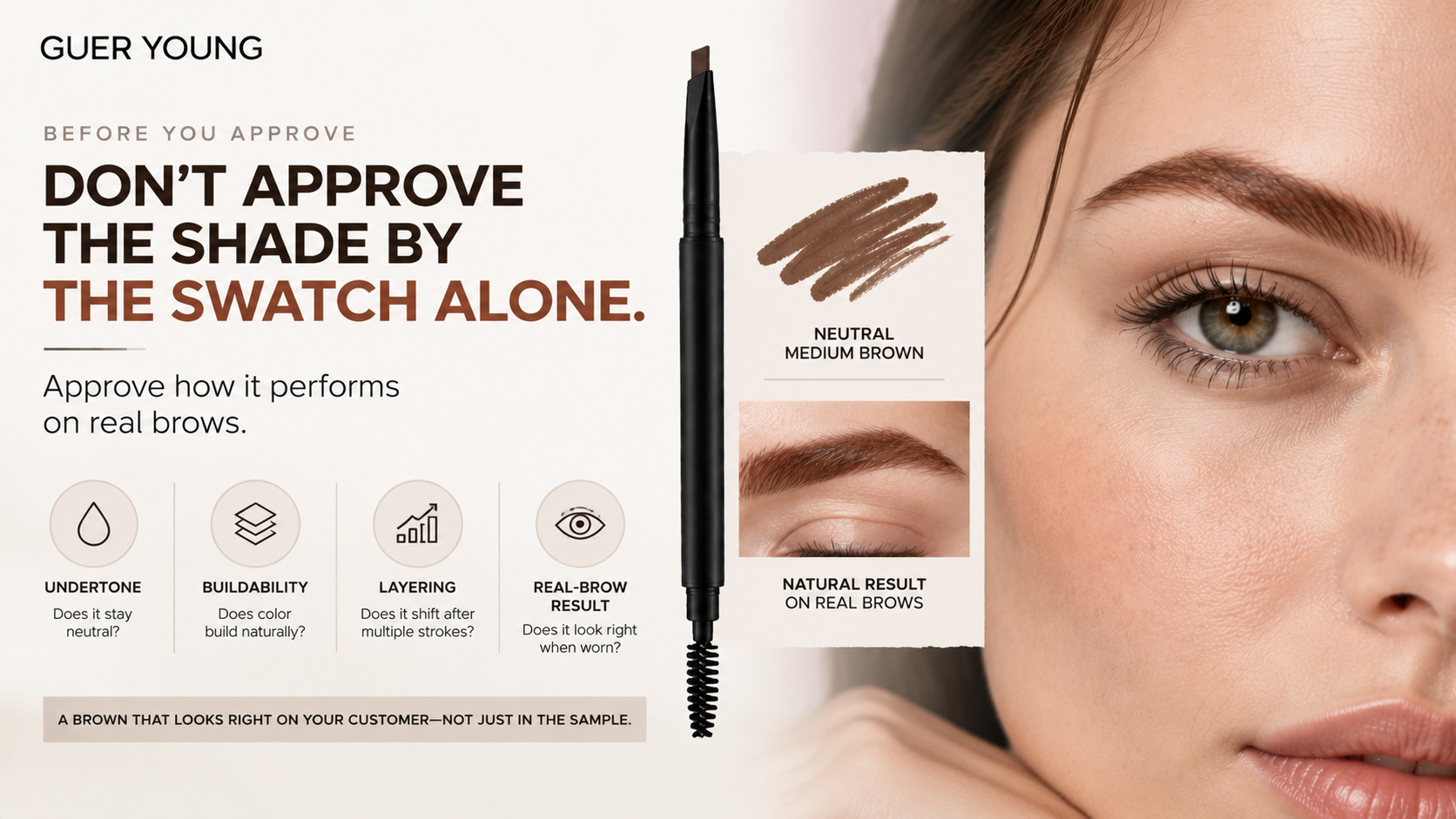
Before approving a shade for production, look beyond the initial color impression.
Ask:
Does the first stroke match the intended shade?
Does the eyebrow pencil undertone change after multiple layers?
Does the shade become too dark as pigmentation builds?
Does it look significantly warmer or cooler on different skin tones?
How does it interact with natural brow hair?
Does it remain acceptable under natural and indoor lighting?
Does the eyebrow pencil formula deliver the level of color payoff your target consumer expects?
And most importantly:
Does the shade still look right when it is used the way your customer will actually use it?
These questions can help identify potential shade issues before they become consumer complaints.
A Good Brown Is Never Just “Brown”
For beauty brands, building a better brow range does not necessarily mean adding more colors.
It means making each color more intentional.
Too red. Too warm. Too gray. Too dark.
These may sound like small differences during product development, but they can have a major impact on how natural a brow product looks—and how consumers evaluate it after launch.
At GUER YOUNG, we approach custom brow pencil development by looking at undertone, pigmentation, formula, target skin tones, hair colors, layering behavior, and real application together.
So if your brand has already gone through several sample rounds because your Medium Brown keeps looking red, your Ash Brown is too gray, or your shades become much darker when layered, simply requesting another color adjustment may not solve the underlying problem.
The entire eyebrow pencil shade development process may need a closer look.
Don't settle for a brown that only looks right in the sample.
Develop a brown that still looks right when your customer wears it.
Contact GUER YOUNG to discuss your custom eyebrow pencil project.


andy.li@gueryoung.com

We have 10 years of experience, focusing on the development and sales of high quality eyelash growth serum, mascara, eyebrow gel, eyebrow color and other products. We also offer custom services, from tube
design to cosmetic fillings and packaging


Room 1, C3 Factory Building, No.8803 Zhuhai Avenue, Lianwan Industrial Zone, Pingsha Town, Gaolan Port Economic Zone, Zhuhai, Guangdong,China
QUICK LINKS
D Zone,5/F, NO.8 CuiZhu 5th Street,
Qianshan Xiangzhou District,Zhuhai,
Guangdong,China,519070

lynn.zhou@gueryoung.com
winnie.zhong@gueryoung.com
niki.xu@gueryoung.com